Oct 31, 2026Selection Guides
Planetary Gearbox Replacement: 6 Checks Before You Buy
Replacing a planetary gearbox with another brand? Six checks that decide compatibility: model ID, mounting dimensions, ratio, torque and backlash, servo interface, operating conditions.
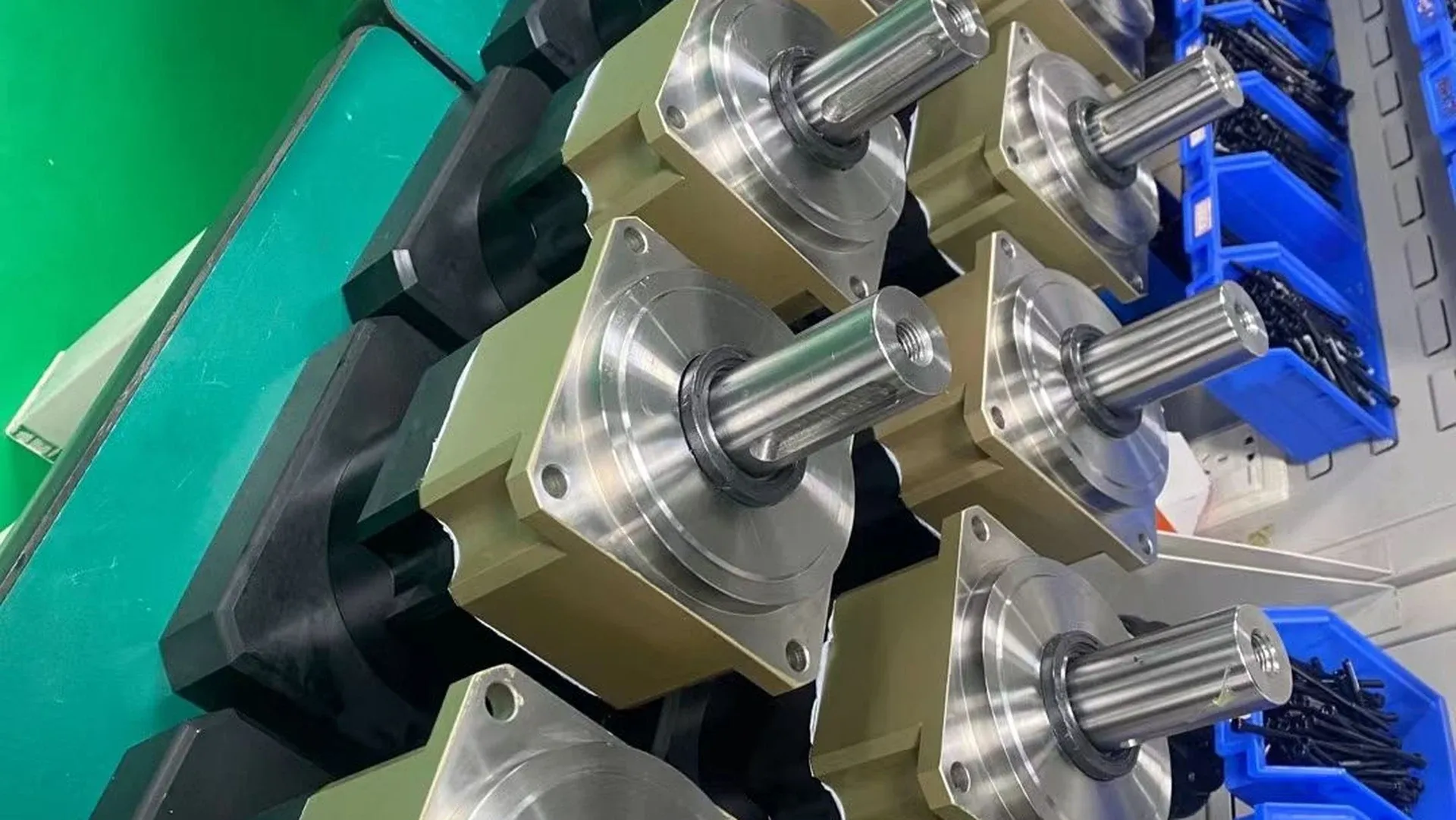
When a planetary gearbox needs replacing, buyers face a practical question: can you skip the original brand and buy an equivalent from another manufacturer?
The answer is yes, in many cases. But there is a real risk. Two gearboxes that look almost identical can still differ in mounting dimensions, torque rating and connection details. Order on appearance alone and you may end up with a unit that will not fit, misses the positioning accuracy, or stops the machine.
These six checks cover what to confirm before you order a replacement.
1. Find the original gearbox model
The fastest route is the nameplate: it gives the series, frame size and reduction ratio. If you can also find the original catalogue or a dimension drawing, matching a replacement becomes far easier.
A model number alone is not always enough. Manufacturers use different naming conventions, and the underlying parameters can differ even when the model string looks similar.
If the nameplate is gone, take clear photos of the unit and measure the main mounting dimensions, then send them to a supplier for identification.
2. Confirm the mounting dimensions match
This is the step that decides whether the replacement will physically work. Check the following against the drawing.
Housing and overall length — does it fit the space the old unit occupied?
Output shaft diameter and length — does the coupling or pulley still engage?
Mounting flange size — does it bolt to the same surface?
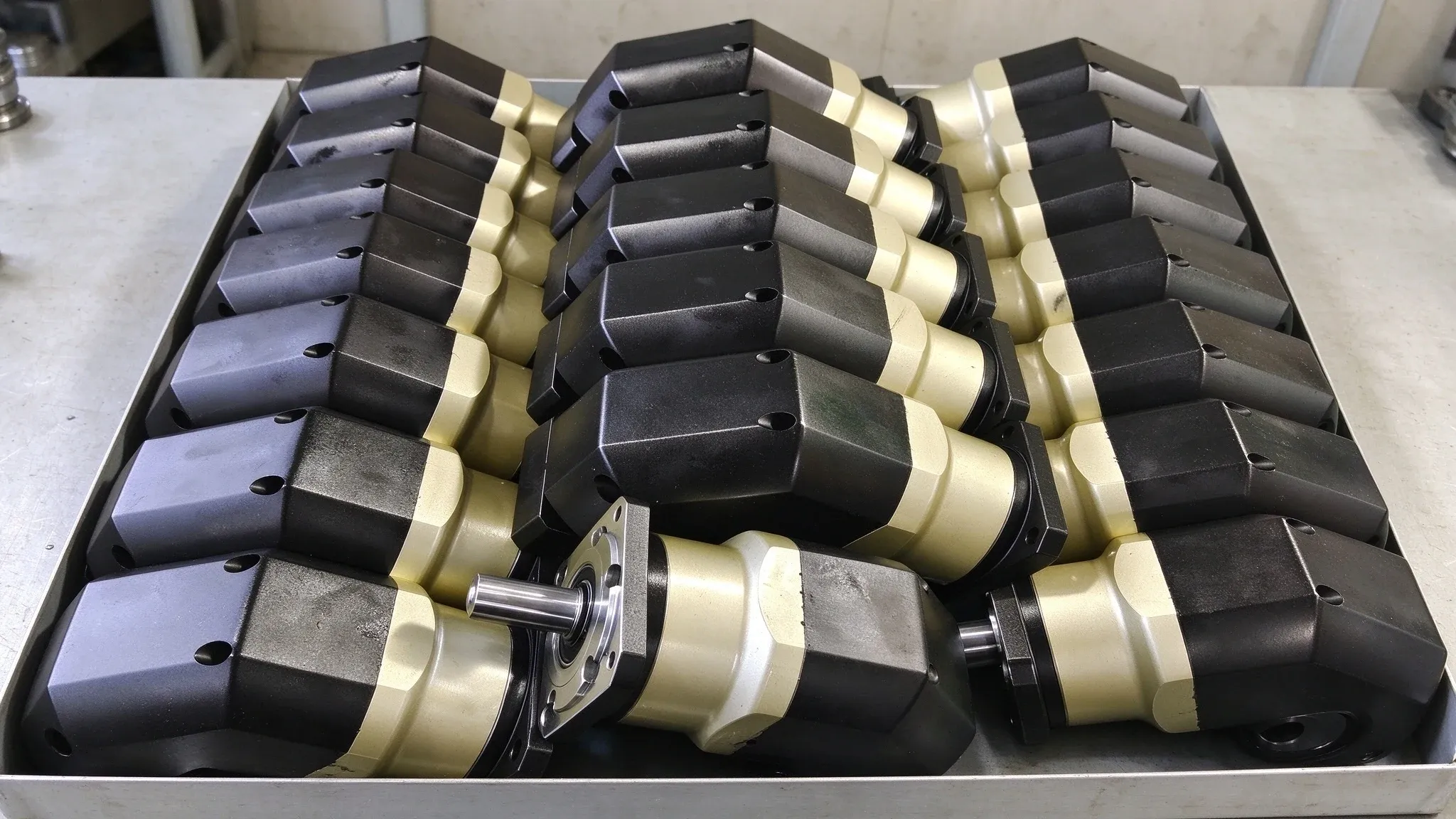
Mounting holes and hole spacing — do the bolt positions line up?
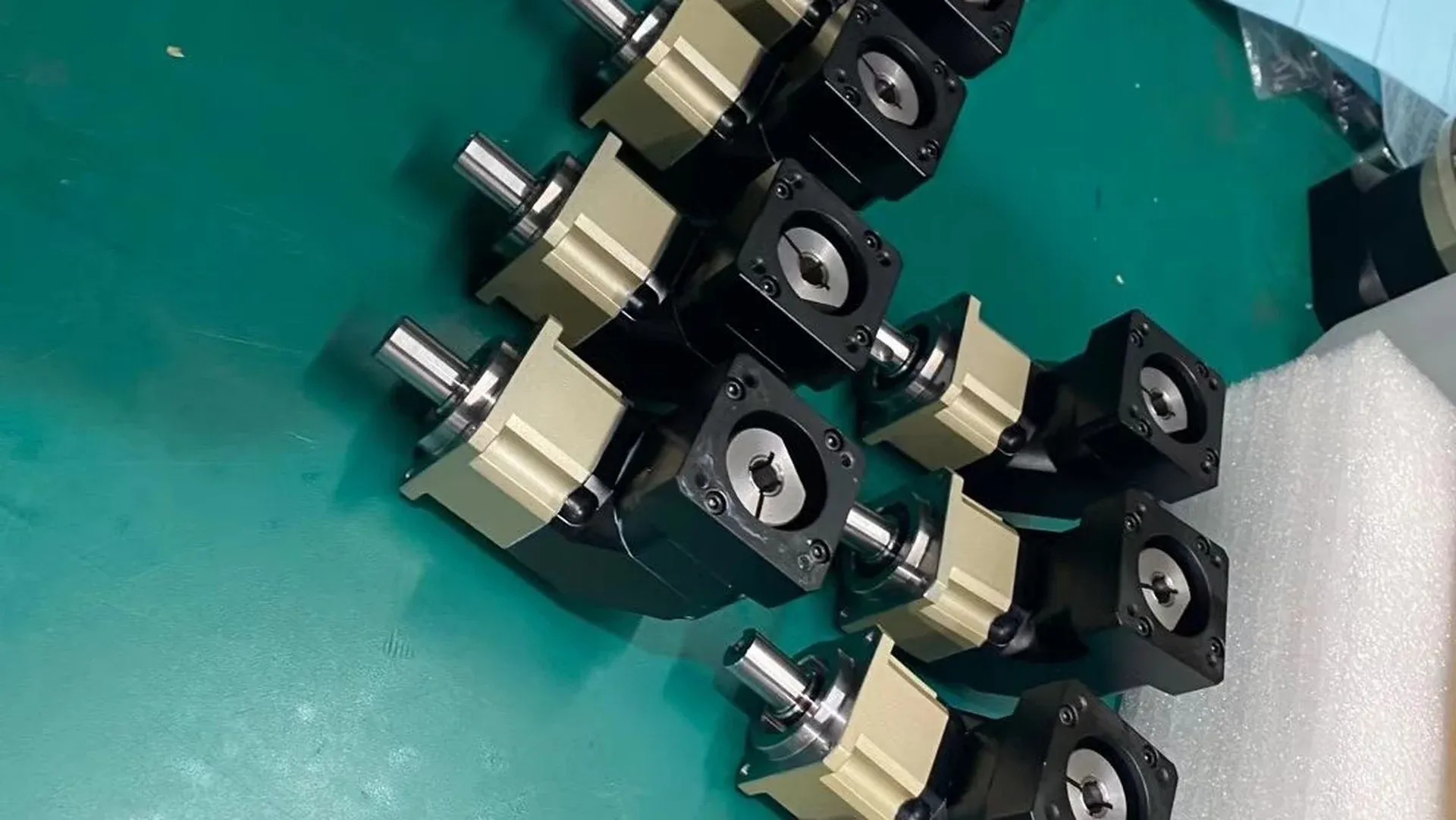
Pilot bore diameter — does it centre correctly?
Output shaft keyway — matching size and position if the old unit used one.
A useful warning: two gearboxes with the same 90 mm frame size can still have completely different shaft dimensions or bolt patterns. Compare the actual drawings side by side, not just the frame number.
3. Match the reduction ratio
The replacement has to keep the machine's output speed unchanged.
If the original ratio is 10:1 and you fit a 5:1 unit, both output speed and torque change at the same motor speed. That alters how the machine runs and may force you to retune the control parameters.
Look for the same ratio first. A matching ratio still does not guarantee an interchangeable unit, so confirm torque and the other performance figures as well.
4. Compare rated torque and backlash
Even at the same ratio, different products can carry different loads.
Confirm rated output torque and allowable peak torque. Machines that start and stop often, or reverse direction frequently, put higher demands on the instantaneous torque, and an under-rated replacement will not hold up.
Backlash matters just as much. If the machine needs high positioning accuracy, a replacement with wider backlash will show up directly in forward and reverse positioning.
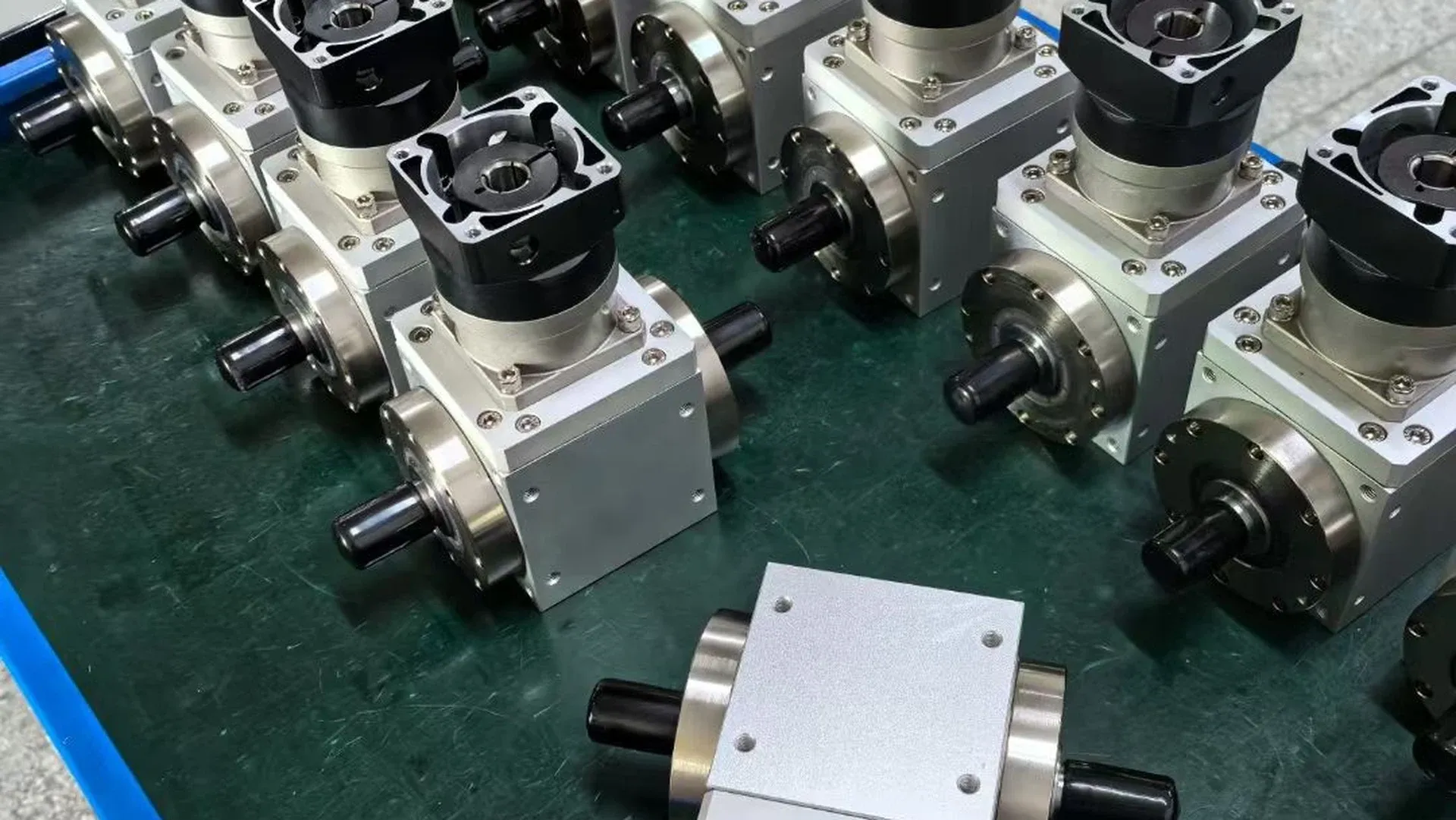
Also check torsional rigidity, allowable input speed, and the permitted radial and axial loads on the output shaft.
5. Check servo motor compatibility
Many planetary gearboxes are matched to servo motors from brands such as Mitsubishi, Yaskawa, Panasonic, Delta and Siemens.
When replacing, confirm the motor mounting flange, the motor shaft diameter, the motor shaft length and the connection method.
Sometimes a suitable adapter flange solves the mismatch. Other times you need a different gearbox frame, so provide the full servo motor model and its dimension drawing before deciding.
6. Check the real operating conditions
Look at how the machine actually runs. Is it continuous duty, or frequent reversing? Is there dust, moisture or high temperature around the installation?
If the old gearbox failed, find out why before fitting a new one. Long-term overload, incorrect installation or a misaligned coupling will damage the replacement in the same way. Replacing the part without fixing the cause just repeats the failure.
Common questions and next step
Can another manufacturer's planetary gearbox be used as a direct replacement?
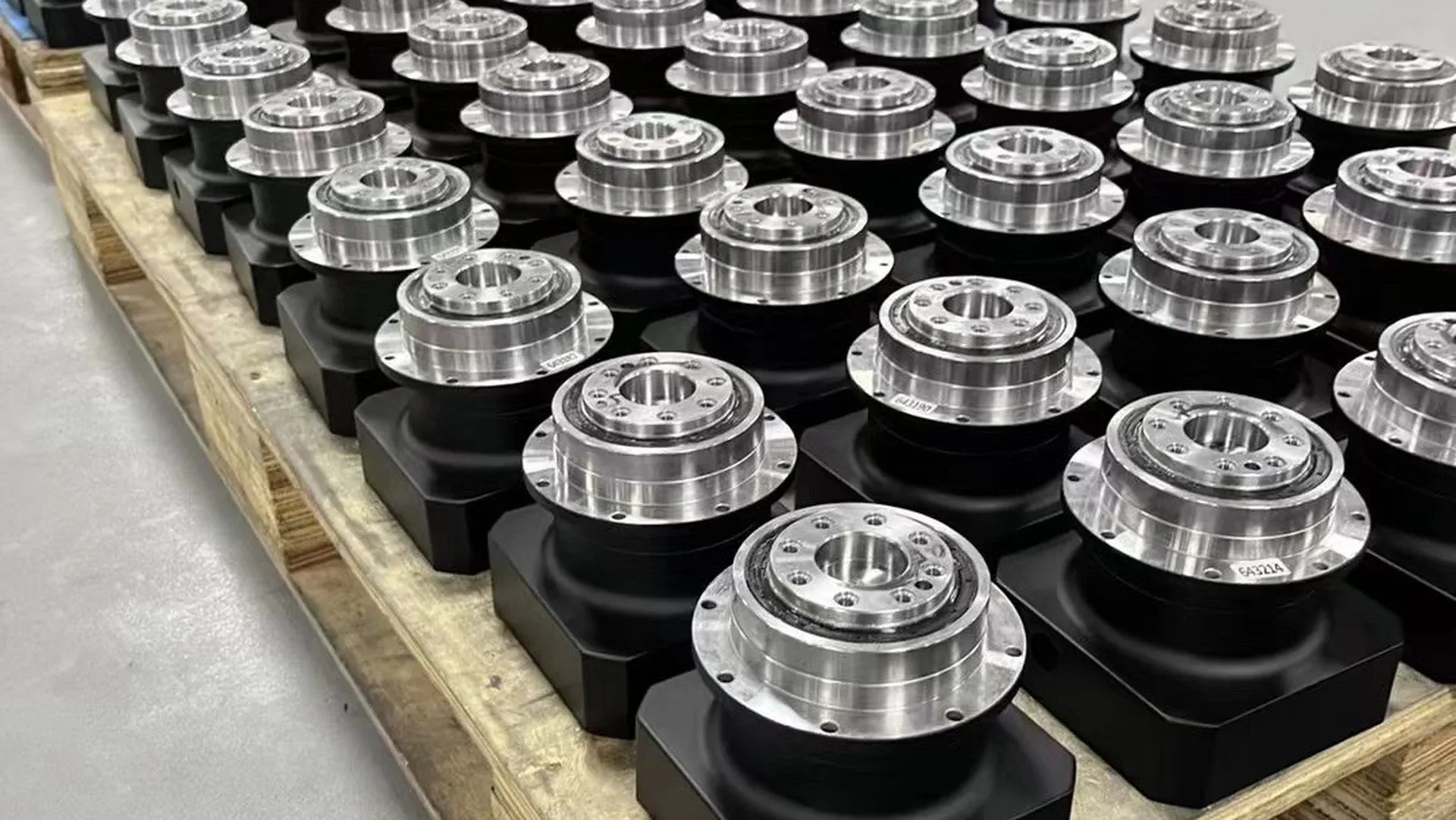
Yes, provided you confirm the mounting dimensions, motor connection, reduction ratio and performance parameters first.
Does the servo motor have to be replaced too?
Not necessarily. If you can find a gearbox that matches the existing servo motor, the motor can usually stay.
What if the original model cannot be found?
Send photos of the unit, the measured mounting dimensions, the servo motor details and the machine application. A supplier can use that to identify a workable candidate.
Replacing a planetary gearbox across brands is realistic, but compatibility cannot be judged from appearance or ratio alone. Mounting dimensions, torque, backlash, servo interface and the real operating conditions are what decide it.
If you have the nameplate photo, the mounting dimensions and the servo motor model, send them through our contact page and we will check a replacement candidate against your drawings. You can also browse the current planetary gearbox range for frame sizes and ratios.