Oct 30, 2026Selection Guides
Inline vs Right-Angle Planetary Gearbox: How to Choose
Inline or right-angle planetary gearbox? Compare shaft position, mounting direction, axial space, efficiency and backlash, and learn which layout fits a constrained machine.
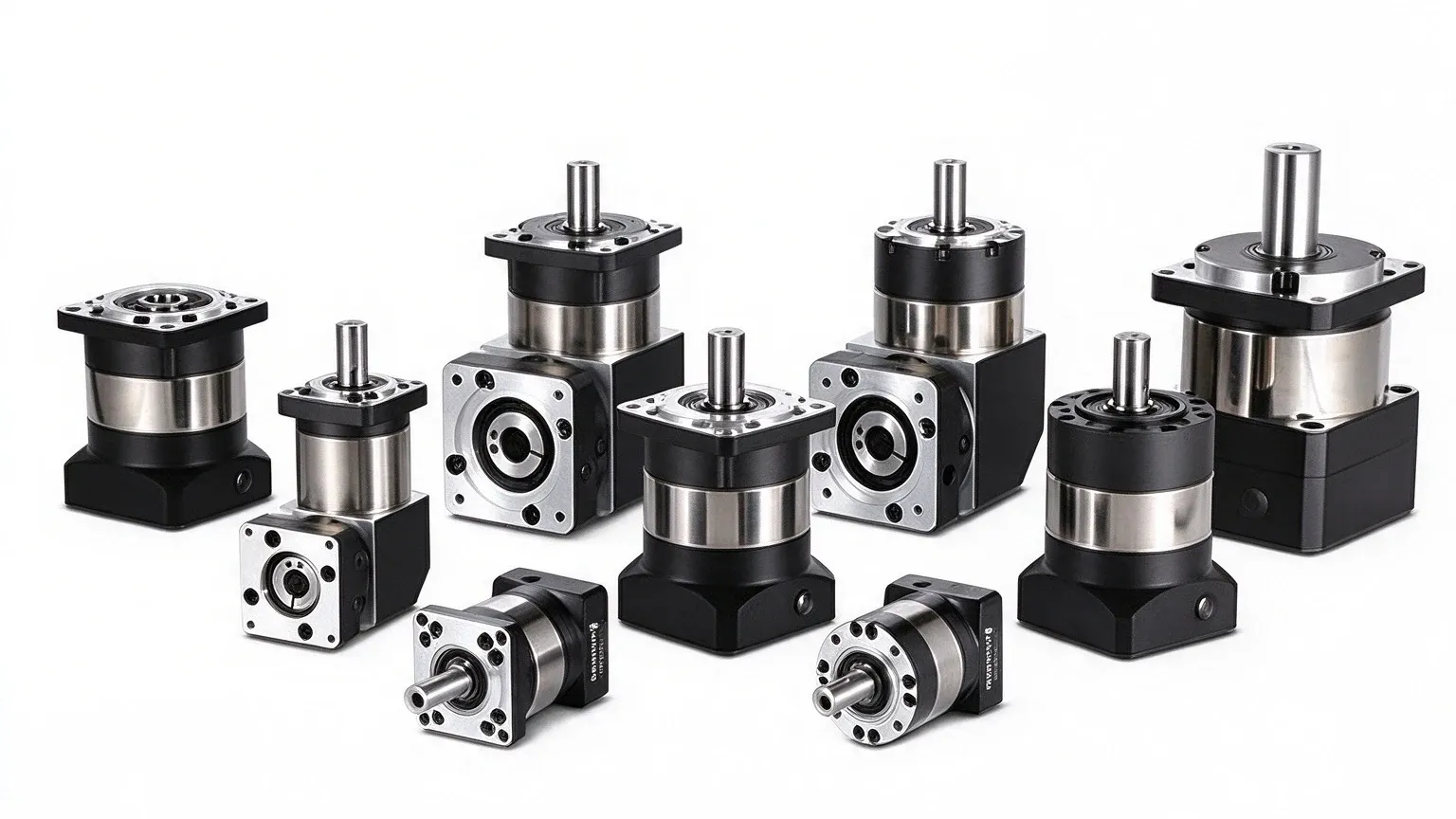
Both inline and right-angle planetary gearboxes reduce speed and transmit torque. The core difference is the direction the motor mounts: if you have axial space, choose inline; if axial length is tight and the motor has to sit to the side, choose right-angle.
Buyers usually check ratio, torque and backlash first. A question that comes up just as often is whether to specify an inline or a right-angle unit.
Both types are used widely in industrial automation, robotics and packaging machinery. The main difference is motor mounting direction and how power is transmitted. Here are a few simple examples to make the choice clear.
What is an inline planetary gearbox?
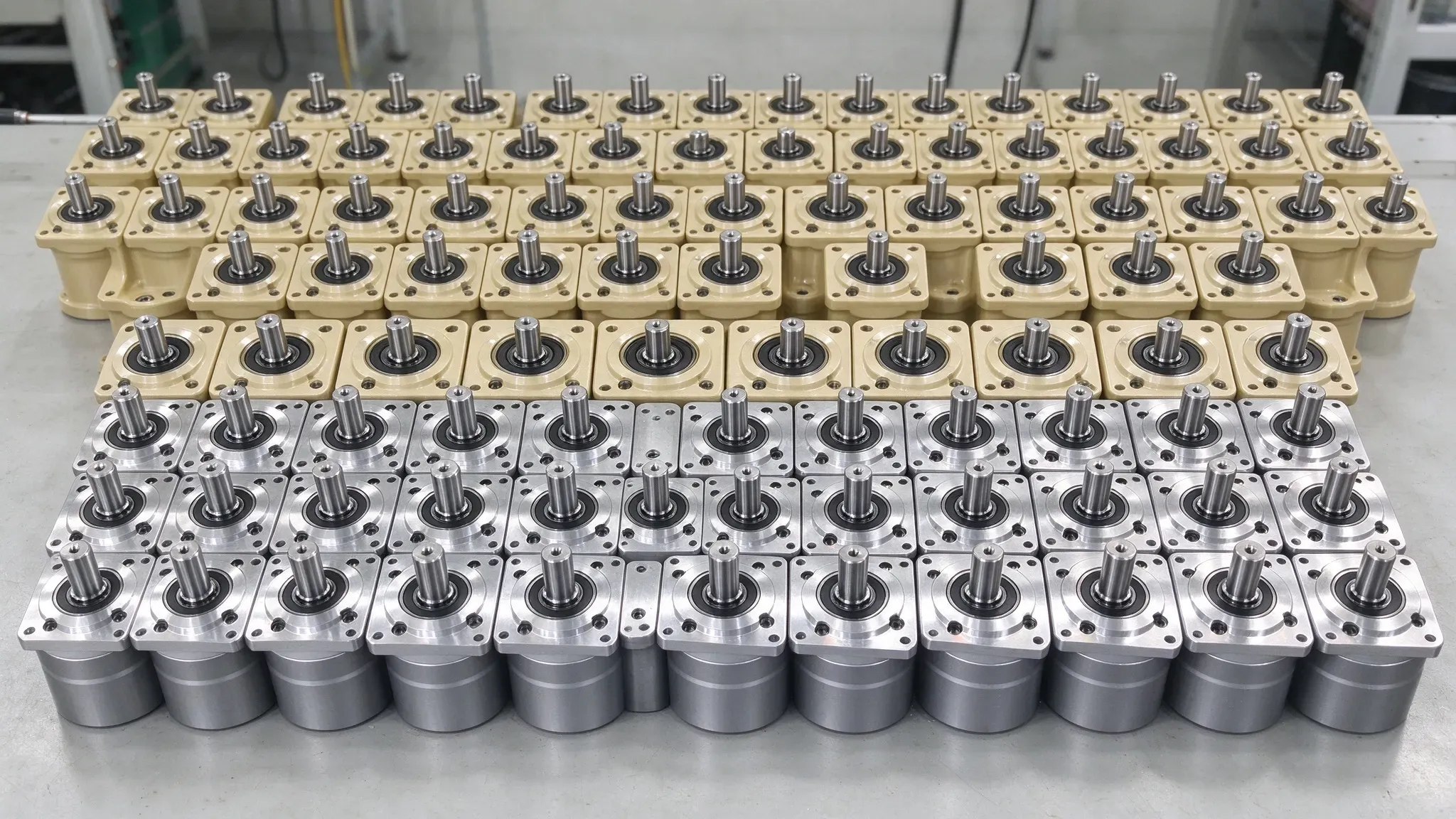
An inline planetary gearbox has its input shaft and output shaft on the same axis. The motor connects in line with the gearbox.
If a servo motor drives a conveyor or a ball screw, the motor mounts directly behind the gearbox so power travels along one axis.
This layout is straightforward and the installation is simple to plan. The catch is axial length: because the motor sits in line, the assembly needs enough room in that direction. If the machine is already tight on length, an inline unit may not fit.
What is a right-angle planetary gearbox?
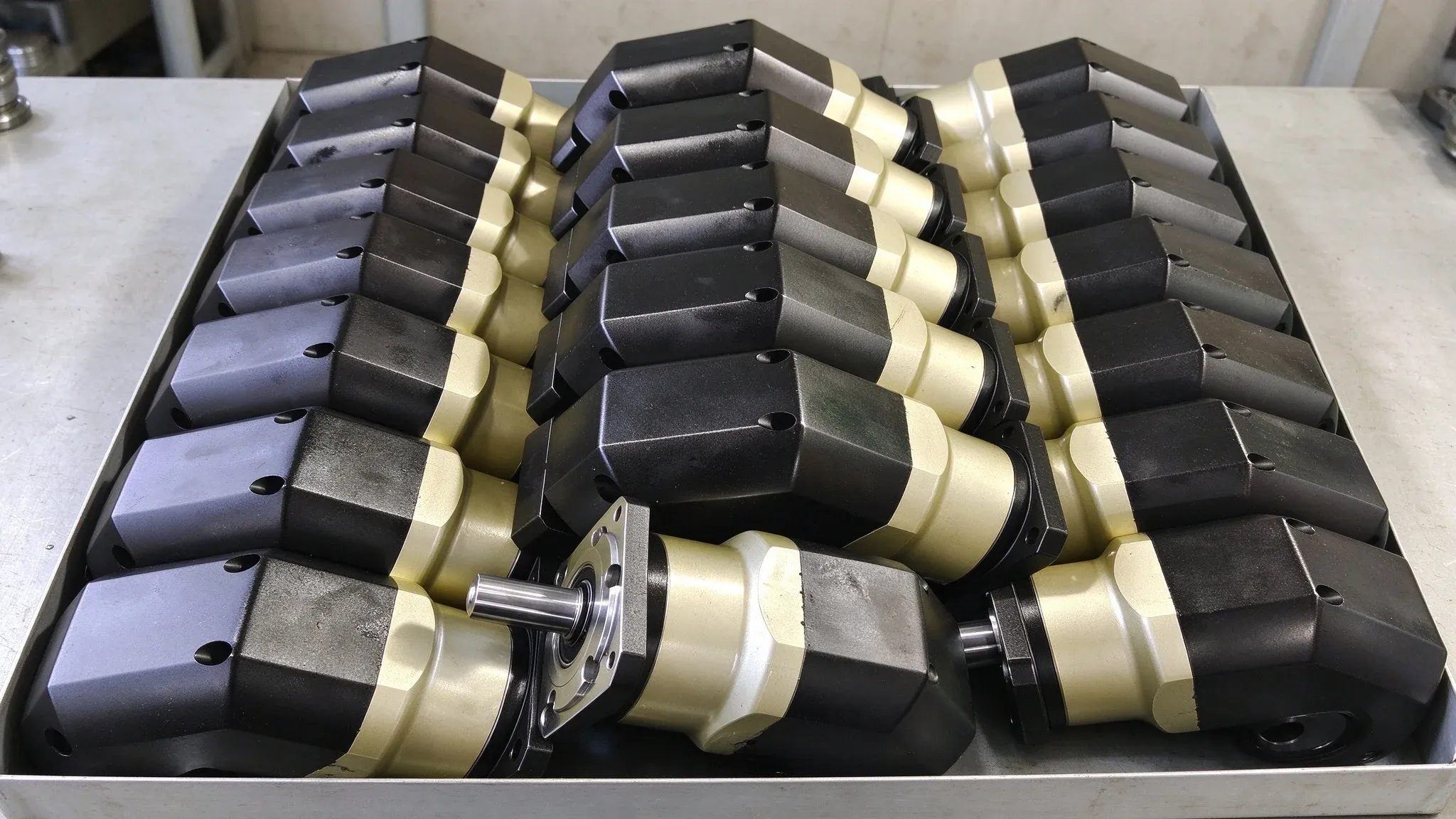
A right-angle planetary gearbox turns the drive through 90 degrees. Instead of mounting behind the output, the motor mounts at the side of the gearbox, perpendicular to the output shaft.
Take a packaging machine where space behind the drive shaft is very limited. An inline gearbox would push the motor outside the reserved envelope. A right-angle unit changes the mounting direction and makes the internal layout easier to arrange.
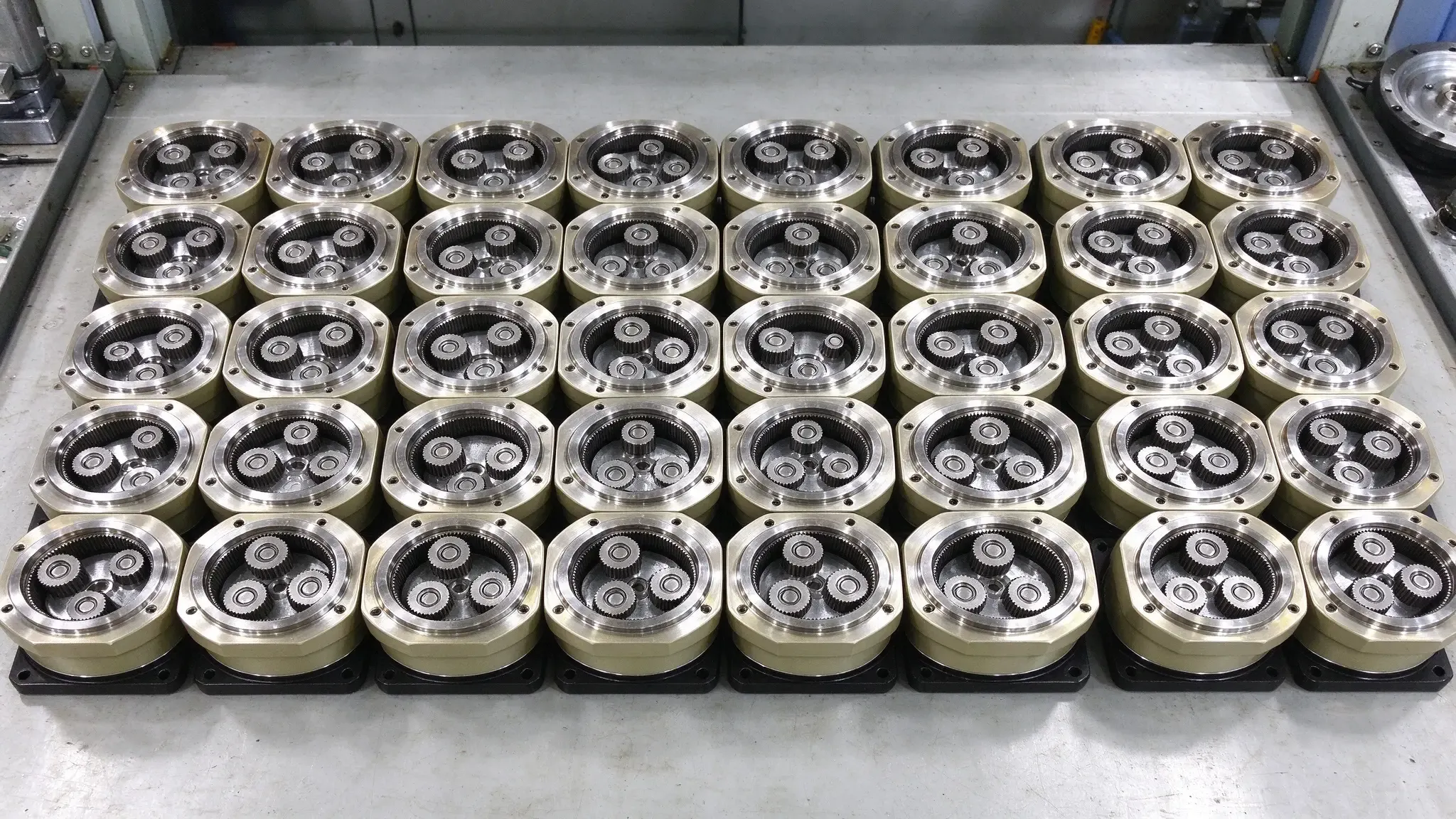
One point worth checking: a right-angle gearbox is not always smaller than an inline one. Compare the actual installation dimensions of the specific model, and browse the right-angle gearbox range for available frame sizes.
How do the two types compare?
Both transmit speed reduction and torque, but the mounting structure differs.
Shaft position — inline has input and output on the same axis; right-angle has them at 90 degrees.
Mounting — inline mounts in line with the motor; right-angle allows the motor to mount to the side.
Space requirement — inline needs axial length; right-angle suits layouts where axial space is restricted.
Transmission efficiency — inline is usually slightly higher because there is one less set of gears in the power path; right-angle adds a bevel or hypoid mesh, which usually costs some efficiency. Confirm against the datasheet for the exact model.
Backlash — inline depends on the model and the gear grinding process; right-angle is also affected by the accuracy of the bevel or hypoid gear set.
Motor compatibility — both match servo and stepper motors, confirmed against the specific motor model.
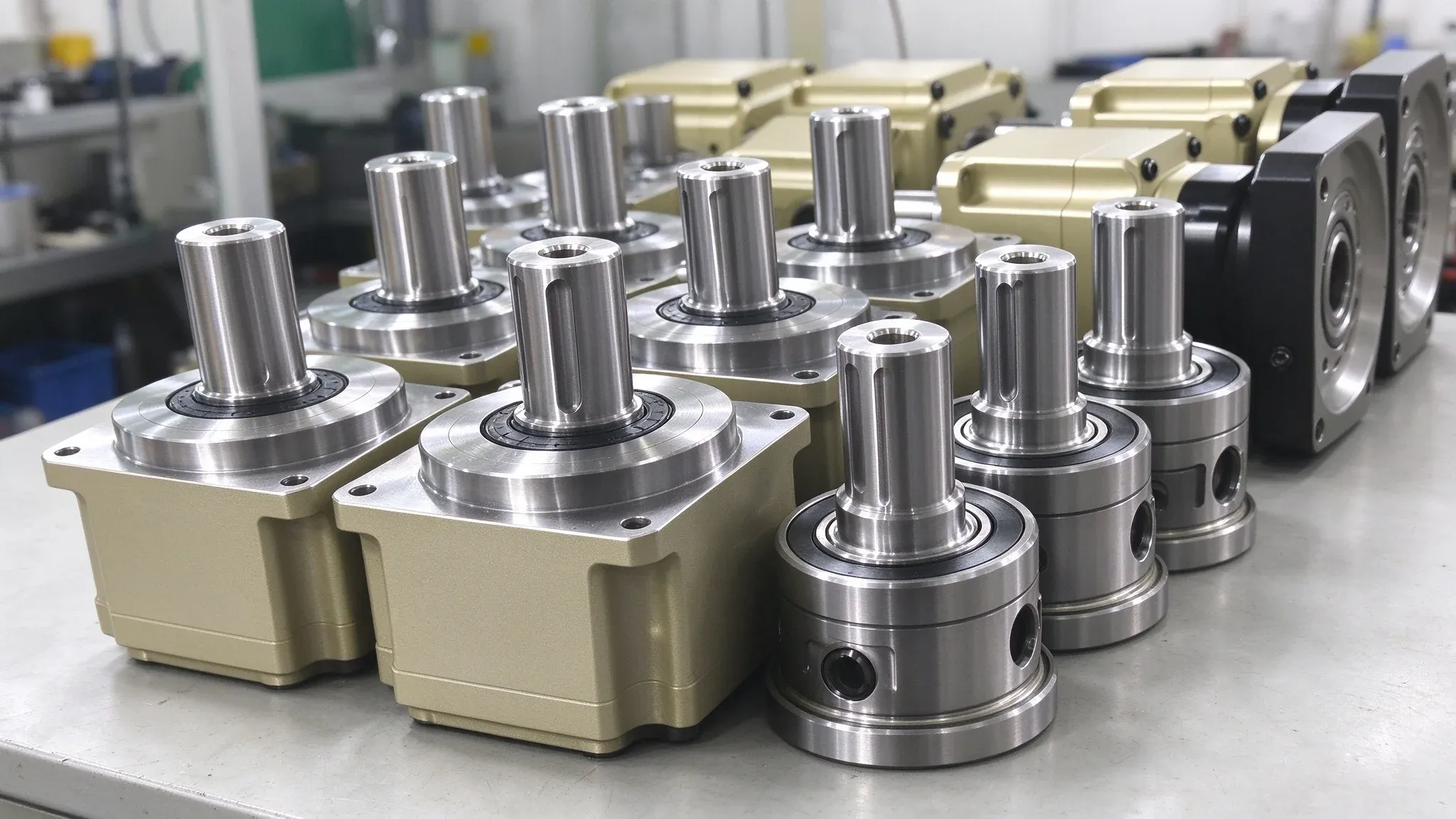
Typical applications — inline covers automation equipment, conveyors and CNC machinery; right-angle covers compact machines, packaging equipment and automation.
Some right-angle gearboxes use an additional bevel or hypoid gear set to change direction. That internal structure can affect efficiency, temperature rise, ratio range and backlash.
It is not accurate to say inline is always better, or that right-angle is always better for precision equipment. Compare the parameters of the specific models.
Which one suits your machine?
Judge by installation space and actual running requirements.
Choose inline when the machine has room for the motor directly behind the gearbox and a straight drive line is convenient. Conveyors and linear motion mechanisms are common examples.
Choose right-angle when installation length is limited, or when the motor has to sit at 90 degrees to the output. Compact packaging machines and automated assembly equipment fit this case.
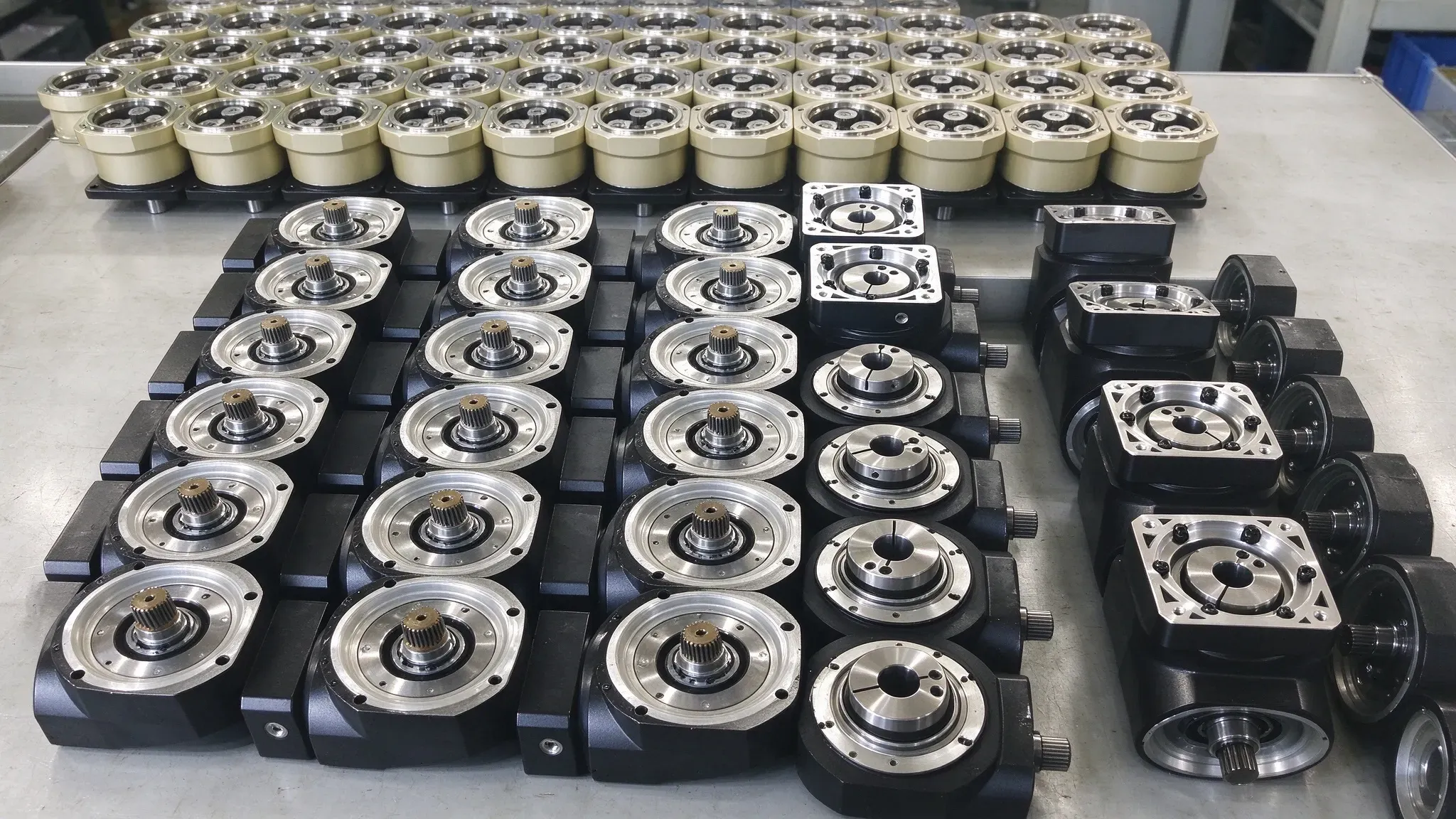
Neither type is inherently better. The right choice is the one that matches the machine.
What else to confirm when buying?
Beyond mounting direction, check these parameters.
Ratio — can it deliver the output speed the machine needs?
Output torque — can it carry the actual running load?
Backlash — does it meet the positioning accuracy requirement?
Motor compatibility — does it match the existing servo or stepper motor?
Mounting dimensions — does it fit the reserved space and connection points?
Also consider operating speed, external load and duty cycle.

One warning worth repeating: two gearboxes with the same ratio can still differ in torque, mounting dimensions and allowable load. Never specify a model from the ratio alone. If you already have the motor model and the installation drawing, a gearbox manufacturer can give a preliminary selection review.
A simple selection example
Suppose you are building an automatic packaging machine. You have a servo motor and need a planetary gearbox with a 10:1 ratio. During installation you find that space behind the drive shaft is limited. An inline unit would take up more room than the machine allows.
A right-angle planetary gearbox lets the motor mount at the side, which changes the overall installation layout. Before confirming the model, still verify output torque, backlash, motor interface and mounting dimensions, so the result does not end up as “it fits but does not perform”.
Common questions and next step
Is a right-angle planetary gearbox always less accurate than an inline one?
Not necessarily. Positioning performance depends on the design, backlash and rigidity of the specific gearbox, not on the mounting arrangement alone.
Does a right-angle gearbox always save space?
Not necessarily. A right-angle unit mainly changes the motor mounting direction. Whether it saves space depends on the actual machine layout and the full installation dimensions.
Can both types be paired with a servo motor?
Yes, as long as the mounting interface and performance requirements of the gearbox and motor match. The specific motor model still has to be confirmed.
Choosing between inline and right-angle starts with installation space and drive requirements, then moves to ratio, torque, backlash and motor compatibility.
Send us your servo motor model and the installation drawing through our contact page and we will give a preliminary planetary gearbox recommendation. Final confirmation is always against the product datasheet and the real operating conditions.