Oct 23, 2026Selection Guides
How to Choose the Right Planetary Gearbox for a Servo Motor
Six practical steps for selecting a planetary gearbox for a servo motor: application requirements, gear ratio, rated and peak torque, backlash, load inertia and motor mounting compatibility.
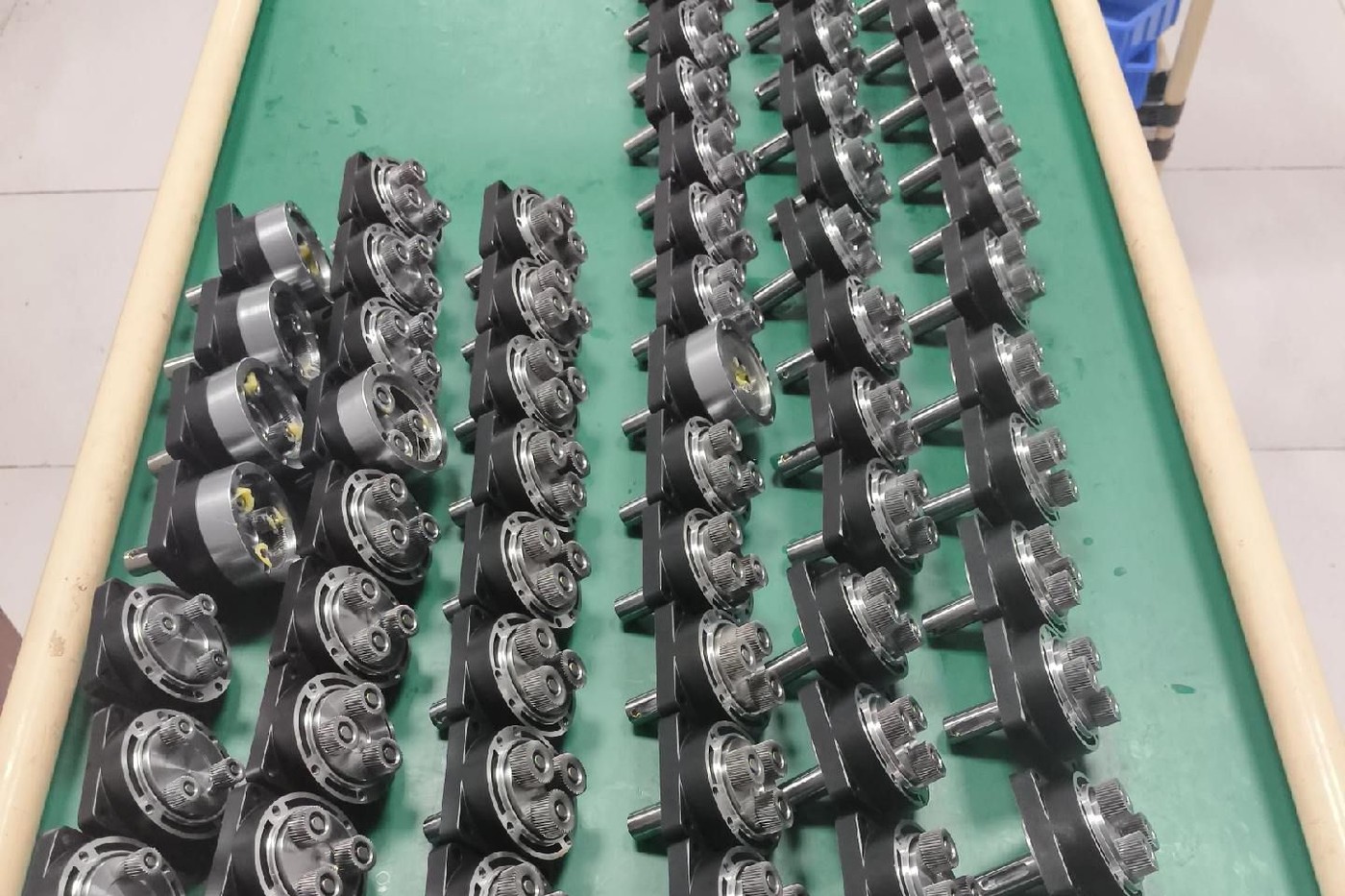
Choosing a planetary gearbox involves more than simply matching it to the power rating of a servo motor. You also need to consider the load conditions, required output speed, motor mounting interface, and positioning accuracy of your equipment. All these factors influence the selection of a suitable planetary gearbox.
For automation equipment manufacturers and purchasing engineers, the following six steps can help you identify the right gearbox for your application.
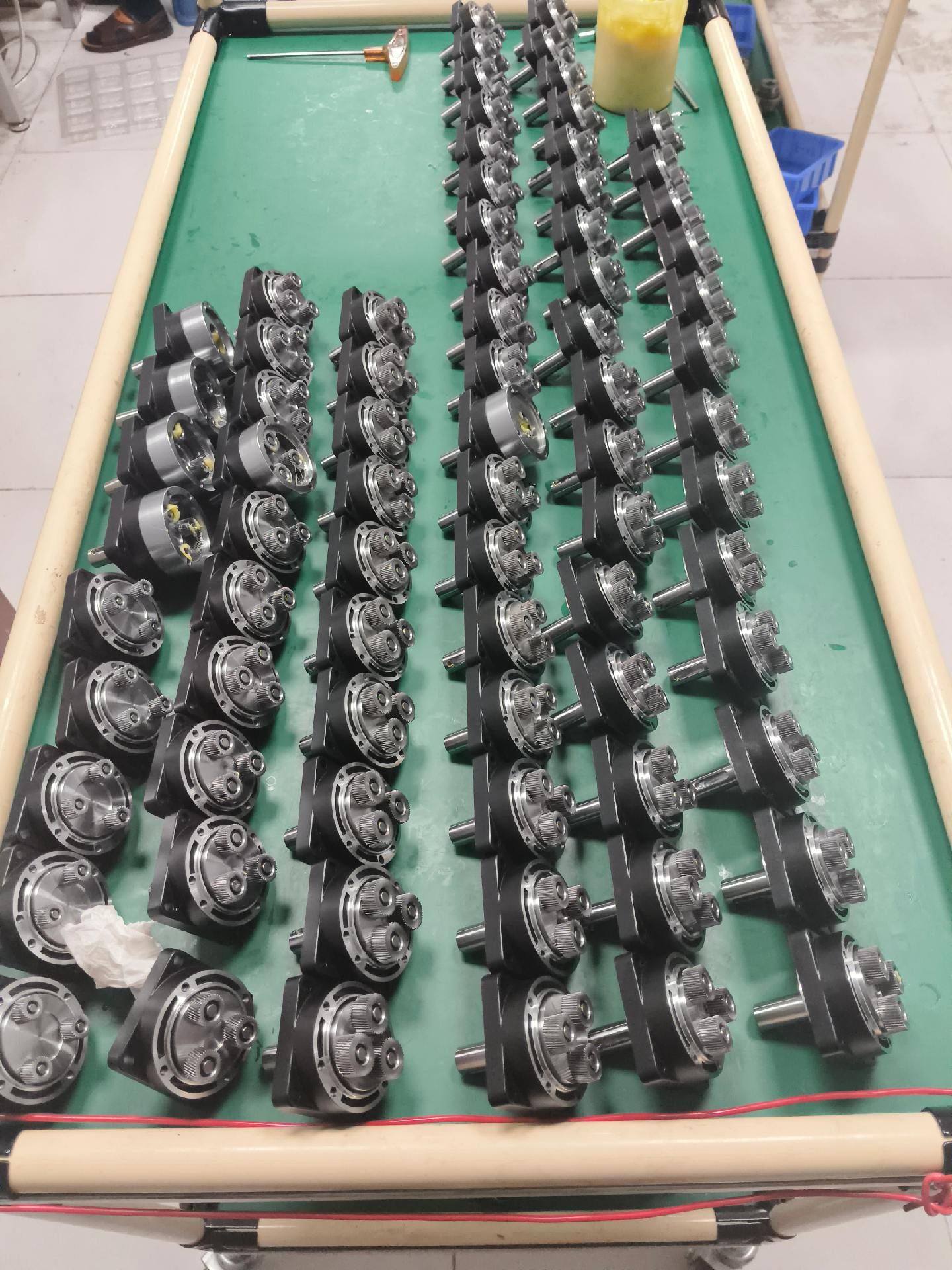
1. Identify Your Application Requirements
First, determine how the planetary gearbox will be used in your equipment. Typical applications include rotary fixtures, conveyor systems, robotic joints, and packaging machinery.
You should consider several important factors:
The load applied to the gearbox
Acceleration requirements
Daily operating hours
Frequency of forward and reverse rotation
Working environment and operating conditions
Even when two machines use servo motors with the same power rating, they may require different gearbox specifications.
For example, a conveyor running continuously may have different transmission requirements from a positioning mechanism that frequently starts, stops, and reverses direction.
Understanding the actual operating conditions is an important first step toward selecting a suitable gearbox.
2. Calculate the Required Gear Ratio
The gear ratio determines the relationship between the input speed and the output speed of a gearbox.
The basic formula is:
Gear Ratio = Motor Speed / Required Output Speed
For example:
Servo motor speed: 3,000 rpm
Required output speed: 300 rpm
Calculation: 3,000 / 300 = 10
Based on this calculation, a planetary gearbox with a 10:1 reduction ratio can be considered as an initial option.
However, this calculation alone is not enough to confirm the final gearbox model.
You must also verify whether the selected gear ratio can meet the required operating speeds throughout the machine's working cycle.
This helps ensure that the selected gearbox is suitable for the actual application.
3. Check Rated Torque and Peak Torque
A planetary gearbox must not only handle the torque required during normal operation but also withstand higher torque levels that may occur briefly during acceleration or emergency operating conditions.
Checking both rated torque and peak torque helps ensure reliable operation under different load conditions.
A simplified calculation formula is:
Output Torque = Motor Torque x Gear Ratio x Transmission Efficiency
For example:
Motor torque: 4 Nm
Gear ratio: 10:1
Assumed transmission efficiency: 95%
Calculation: 4 x 10 x 0.95 = 38 Nm
In this example, the estimated output torque is approximately 38 Nm.
Note: This is only a calculation example and does not represent the actual specifications of any ECHOMACH planetary gearbox.
During actual gearbox selection, you must also consider load variations, operating duration, peak torque duration, and the allowable working conditions specified in the product datasheet.
These factors are essential for evaluating whether a gearbox can operate reliably in your equipment.
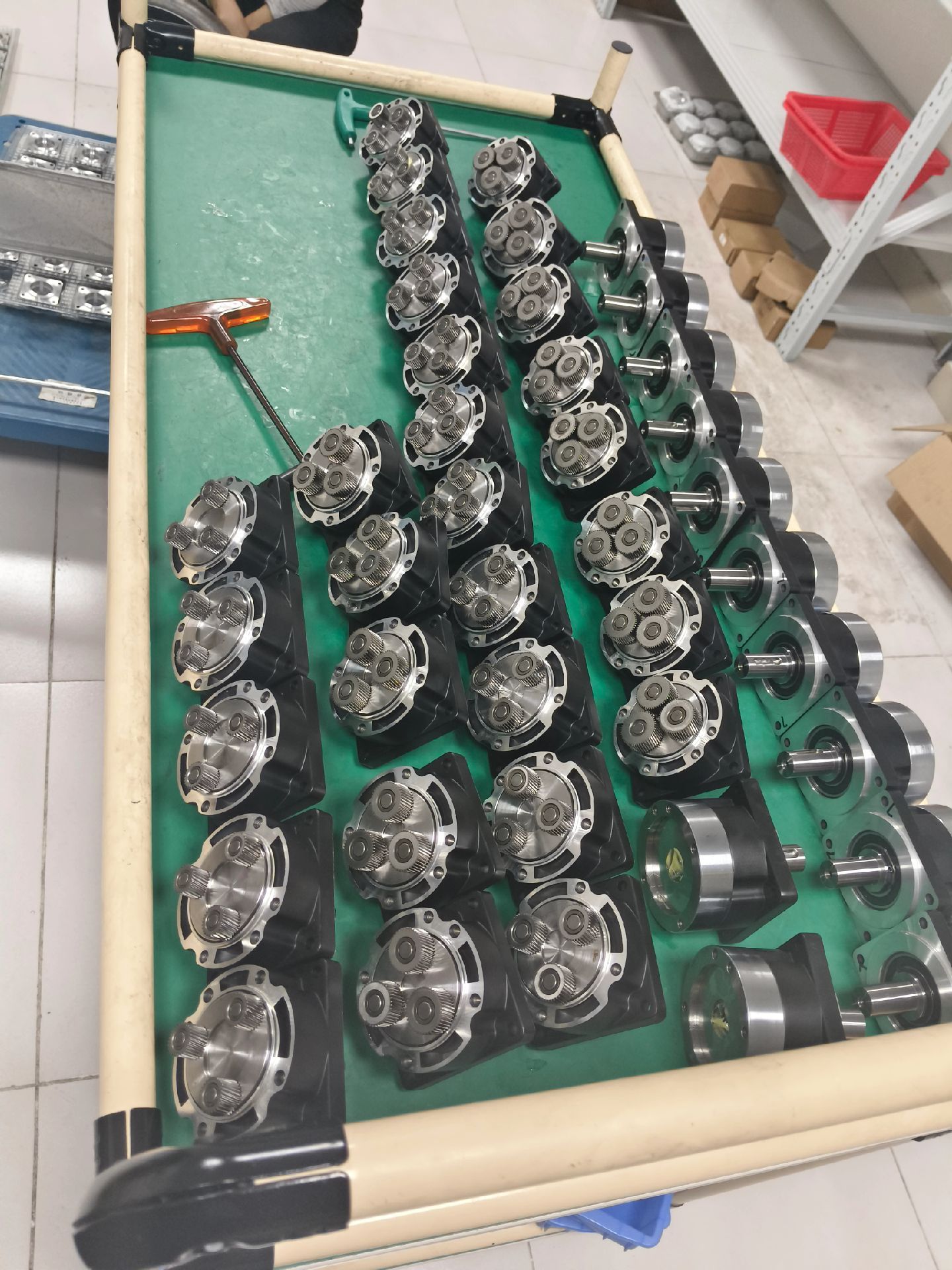
4. Select Backlash According to Positioning Accuracy
Backlash refers to the small amount of angular play between the gearbox input and output when the direction of transmitted torque changes.
It is usually measured in arcminutes (arcmin).
For applications such as precision indexing tables and robotic motion axes, backlash can affect positioning accuracy during forward and reverse movements.
However, lower backlash does not necessarily mean higher overall machine accuracy.
Other factors, including motor control, structural rigidity, couplings, and assembly quality, can also affect positioning performance.
Therefore, when purchasing a planetary gearbox, it is important to check the actual backlash specification of the selected model.
Different planetary gearboxes may have different precision levels, even when they are used for similar applications.
5. Check Load Inertia and Operating Speed
A planetary gearbox changes the equivalent load inertia reflected to the motor.
In a simplified ideal model, the relationship can be expressed as:
Reflected Load Inertia = Output-Side Load Inertia / Gear Ratio squared
A suitable gear ratio can help improve the load matching between the servo motor and the driven equipment.
However, detailed gearbox selection must also consider the gearbox's own inertia and the complete motion profile of the machine.
In addition, you should check the rated input speed and maximum allowable input speed specified by the gearbox manufacturer.
For equipment involving frequent starting, stopping, or reversing, it is also necessary to evaluate heat generation, bearing loads, and expected service life.
These operating conditions can significantly influence gearbox selection.
6. Verify Servo Motor Mounting Compatibility
Even if the gear ratio and torque requirements are satisfied, a planetary gearbox cannot be installed correctly if its mounting dimensions do not match the servo motor.
Before selecting a gearbox, confirm the following information:
Complete servo motor model number
Motor mounting flange dimensions
Pilot diameter
Mounting hole positions and spacing
Motor output shaft diameter
Motor shaft length
These dimensions should then be compared with the gearbox mounting flange and input connection.
For servo motor brands such as Mitsubishi, Yaskawa, Panasonic, Delta, and Siemens, compatibility must be verified using the exact motor model rather than the brand name alone.
Different motor models may have different mounting dimensions and connection requirements.
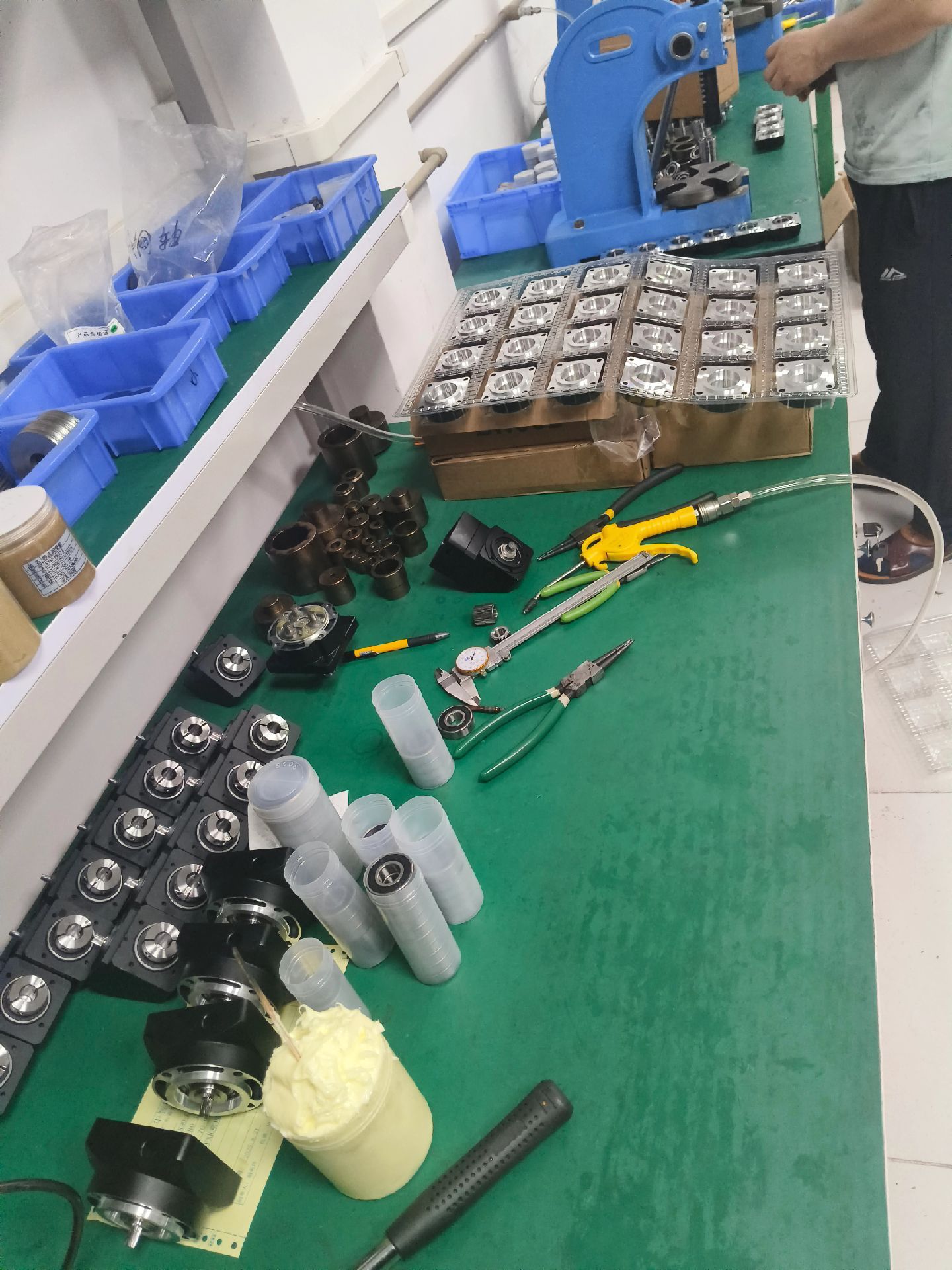
Planetary Gearbox Selection Checklist
Providing complete technical information can help your supplier evaluate a suitable gearbox more efficiently. The checklist below summarizes what to prepare before requesting a quotation.
Application type and duty cycle: rotary fixture, conveyor, robotic joint, or packaging machine
Load torque at the output and the peak torque that occurs during acceleration
Required output speed and the motor rated speed
Calculated gear ratio and acceptable tolerance around it
Allowable backlash in arcminutes for your positioning requirement
Reflected load inertia and the drive's inertia matching limit
Complete servo motor model, flange drawing, shaft diameter, shaft length and keyway
Available installation envelope, including motor length behind the gearbox
Operating environment: temperature, dust, humidity, mounting orientation
Quantity for the first order and annual volume, if known
With these details, a supplier can confirm a gearbox model against the drawing instead of estimating from the motor power alone.