Oct 21, 2026Selection Guides
Matching a Servo or Stepper Motor to a Gearbox: Flange and Shaft Guide
How to match a servo or stepper motor to a planetary or harmonic gearbox: flange size, shaft diameter, keyway, bolt circle and inertia considerations.
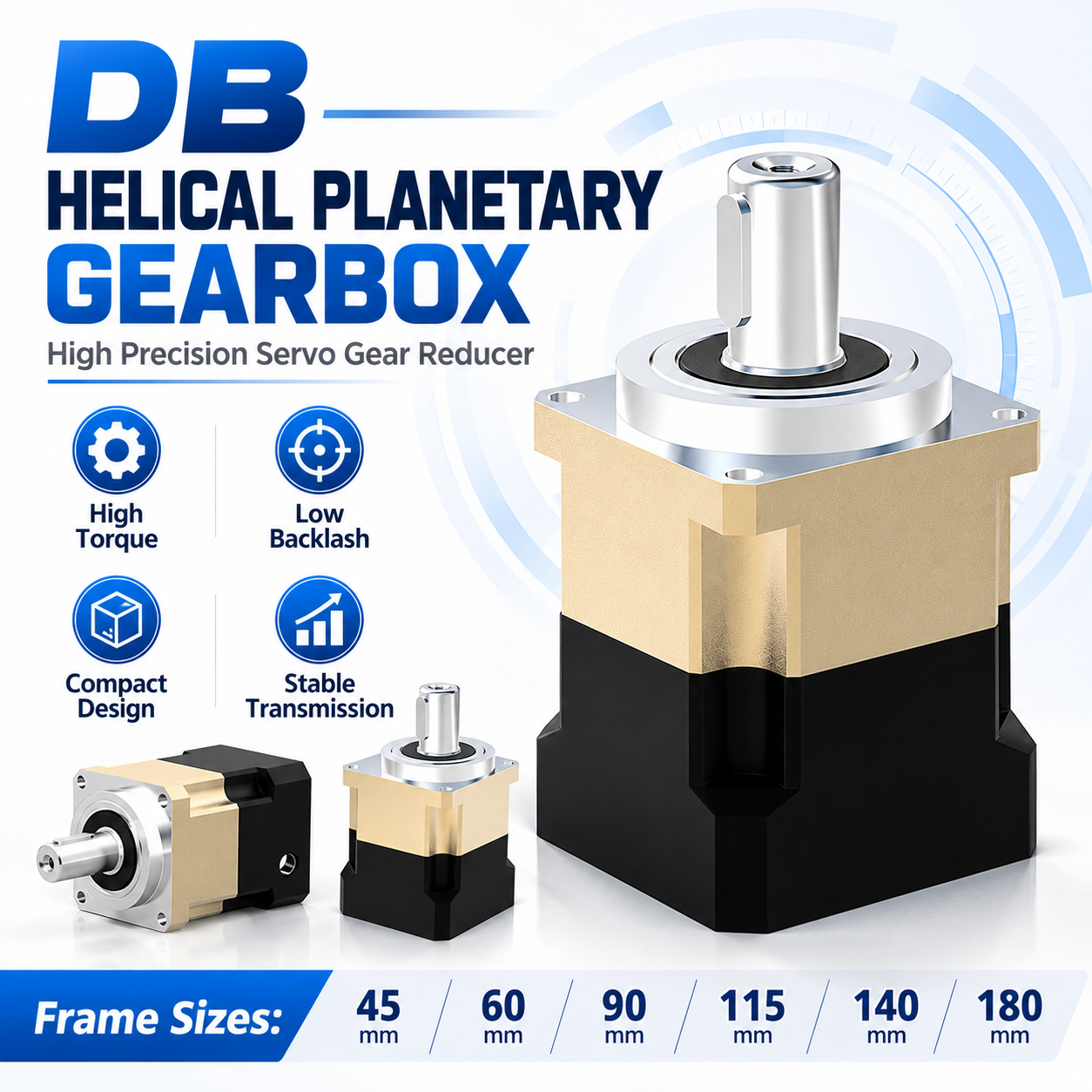
A gearbox only performs as well as its motor interface. Two units with identical ratios can behave very differently if the flange, shaft and bolt circle do not match the motor, or if the inertia reflection is wrong for the drive. This guide covers the four checks that prevent most integration problems.
Check the Motor Flange Before the Ratio
Servo and stepper motors are specified by frame size, and the gearbox input flange must match it. A 42 mm stepper frame typically pairs with a 42 to 45 mm gearbox frame; a 57 stepper or 200W to 400W servo usually matches a 60 mm gearbox frame; a 750W servo or 86 stepper matches a 90 mm frame. Confirm the flange drawing rather than assuming the number alone is enough.
Shaft Diameter, Keyway and Clamp Type
The motor shaft must enter the gearbox input bore with the correct diameter and keyway. Clamping hub designs are common on precision planetary gearboxes because they avoid the backlash a set screw can introduce. Verify shaft length as well: too short and the clamp cannot grip, too long and it fouls the housing.
Bolt Circle and Pilot Diameter
The bolt circle is the diameter on which the mounting screws sit, and the pilot diameter centers the motor on the gearbox. Both must match the motor face. Adapter plates exist for mismatches, but every adapter adds length and a potential source of runout, so match directly when the motor is known at the design stage.
Reflected Inertia and Ratio Choice
The gearbox multiplies motor torque and divides speed, and it also reflects load inertia back to the motor by the square of the ratio. A high ratio makes a large load feel small to the motor, which helps stability, but it also lowers the achievable output speed. Size the ratio from the required output speed first, then confirm the reflected inertia sits in a range the drive can control.
Stepper Versus Servo Considerations
Stepper motors lose torque as speed rises, so a stepper-driven axis usually wants a lower ratio to preserve speed, and benefits from a gearbox that holds position without feedback. Servo motors maintain torque across a wider speed band and tolerate higher ratios, which makes them a better fit for high-reduction harmonic drives in robotic joints.
What to Send for Motor Matching
Send the motor model number, rated power, rated speed, shaft diameter, keyway dimensions and the mounting drawing if available. With those inputs the correct gearbox frame and input configuration can be confirmed without guesswork.